Tomato blight: early blight and late blight, and what to do
Tomato blight is two different diseases spread by spores: early blight, which is common and slower, and late blight, which spreads fast in cool, wet weather and can affect potatoes too. Remove affected leaves at once and keep the foliage dry; with late blight on most of a plant, remove the whole plant.
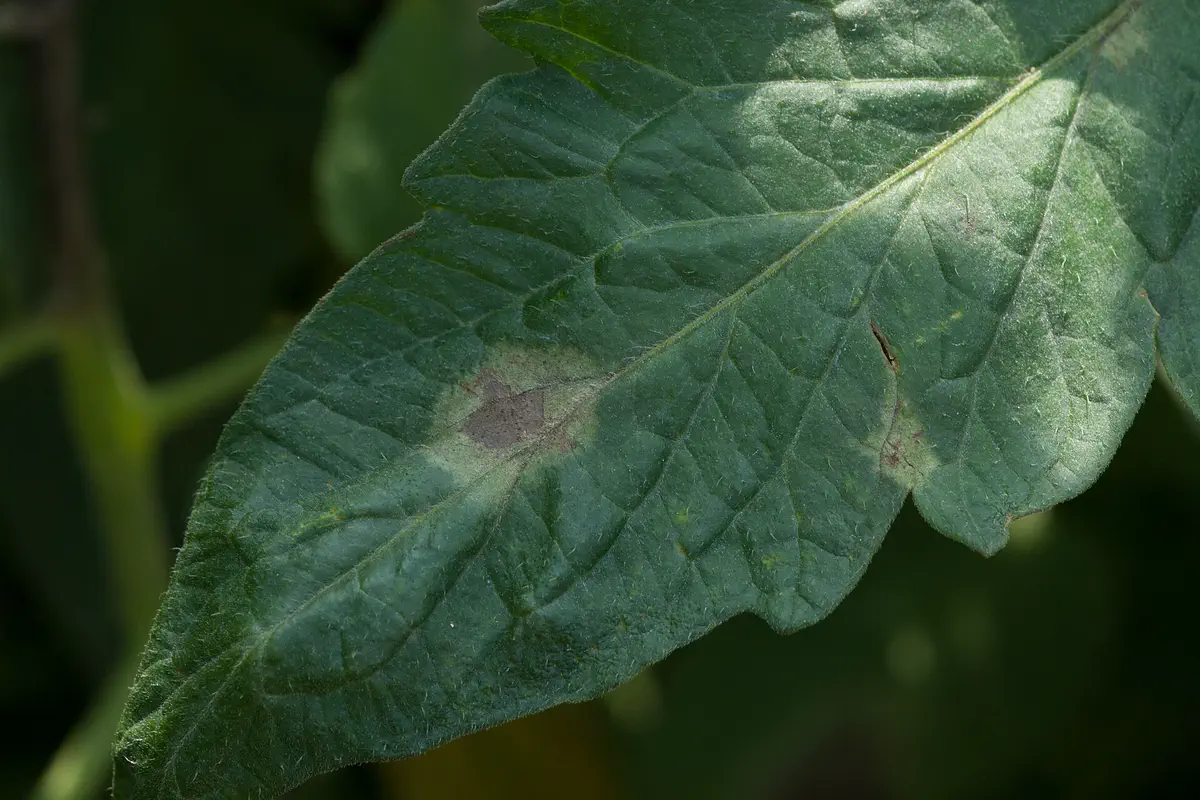
What does it look like?
- Early blight: dark brown to black spots with rings like a target on lower leaves, often with a yellow halo; leaves yellow and drop from the bottom up.
- Late blight: large, irregular grey-green to brown patches that look water-soaked, sometimes with white growth underneath in damp weather; dark streaks on stems; firm brown patches on fruit.
Why does it happen?
- Wet leaves for long periods, from rain or overhead watering.
- Spores on old plant debris, in soil, or blowing in from nearby tomatoes and potatoes (late blight).
- Crowded plants and leaves touching the soil.
What can you do about it?
- Remove affected leaves at once and put them in a sealed bag in the bin, never the compost.
- Water at the base in the morning and keep leaves dry.
- Remove the lowest leaves so none touch the soil, and mulch to stop soil splashing up.
- Give plants space and support so air moves through them.
- With late blight on most of a plant, remove the whole plant into a sealed bag; it spreads quickly to neighbours.
- Rotate where you grow tomatoes and potatoes each year. A copper-based fungicide can slow spread before infection: follow the label, check it is approved for home use where you live, and respect the pre-harvest interval.
When you photograph a plant with this problem, Leafsight gives an assessment that names the likely problem, how serious it looks and how sure it is. Your first assessment that finds a problem includes care steps like these; with Pro or a one-time unlock, every one does.
When should you look closer?
- Patches spreading over days, or dark streaks on stems: likely late blight.
- Fruit with brown patches: don't compost it.
Questions
How do I tell early blight from late blight on tomatoes?
Early blight makes dark brown to black spots with rings like a target, first on the lower leaves, often with a yellow halo, and moves slowly upwards. Late blight makes large, irregular grey-green to brown patches that look water-soaked, often with dark streaks on the stems, and can spread through a tomato plant within days in cool, wet weather. Late blight also affects potatoes.
Should I pull up a tomato plant with blight?
It depends on which blight. With early blight, the usual approach is to remove affected leaves and keep the rest of the plant dry; the whole plant rarely needs to come out. With late blight across most of a plant, remove the whole plant into a sealed bag in the bin, never the compost, because tomato late blight spreads quickly to nearby tomatoes and potatoes.
Does tomato blight stay in the soil?
Early blight survives on old plant debris and in soil, so it can return to tomatoes grown in the same place. Late blight mostly survives the winter in infected potato tubers, such as potatoes left in the ground, and its spores can also blow in from nearby gardens. Clear all tomato debris at the end of the season and grow tomatoes and potatoes in a different spot each year.
What weather causes tomato blight?
Both kinds of tomato blight spread when leaves stay wet for long periods. Late blight is favoured by cool, wet weather, such as several damp days and mild nights in a row, and can spread fast. Early blight is more common in warm, humid weather with frequent rain or overhead watering. Watering at the base in the morning and giving plants space keeps their leaves drier.
Can tomato blight spread to potatoes and other plants?
Late blight can: it affects tomatoes and potatoes, and its spores travel on the wind to plants nearby, so remove badly affected plants promptly and warn neighbours who grow either. Early blight spreads more slowly, in wind, splashing water and on plant debris, which is why clearing fallen leaves, mulching and keeping the foliage dry matter most.
Not sure? Check with a photo
Leafsight looks at a photo of the leaf, asks a few questions about light, watering and drainage, and gives an assessment of the likely problem with care steps. A photo assessment can be wrong: for a hands-on look, ask a local garden centre or plant clinic.
Related problems
- Powdery mildew: white powder on leaves and what to do
- Black spot on roses: how to recognise it and what to do
- Yellow leaves on houseplants: common causes and what to check
- Blossom-end rot on tomatoes: a dark, sunken patch on the fruit
Sources
- RHS: Tomato blight
- UC IPM: Early blight on tomatoes
- Penn State Extension: Tomato diseases and disorders in the home garden
Updated 2026-11-04. All plant problems.
Also in: Español · Deutsch · Français · Português (Brasil) · 简体中文 · 日本語 · 한국어