Yellow leaves on houseplants: common causes and what to check
Yellow leaves on a houseplant usually mean a care problem, most often more water than the soil can dry out or too little light, rather than a disease. Where the yellow starts, on old lower leaves or on new growth, and how fast it spreads narrows down the cause. Fully yellow leaves won't turn green again.
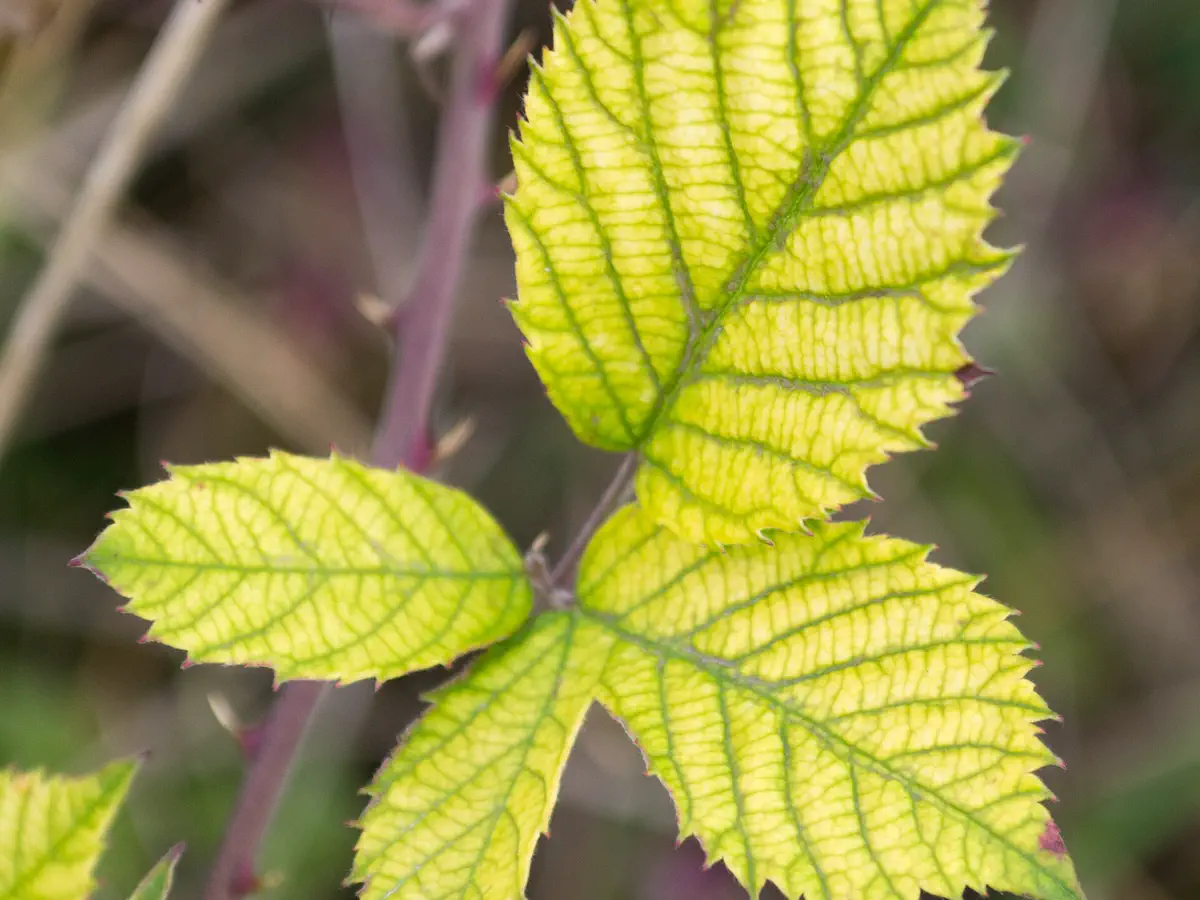
What does it look like?
- Older, lower leaves yellow one at a time while new growth looks fine: often normal ageing, or the plant needs more light or feeding.
- Many leaves yellow at once, soft or limp, with soil that stays wet for days: often too much water or a pot that does not drain.
- Yellow, crisp leaves with soil pulling away from the pot: often too little water.
- Yellow between green veins on new leaves: often a nutrient problem, linked to soil that is old or stays too wet.
Why does it happen?
- Watering more often than the soil dries out, or a pot without drainage holes.
- Too little light for the plant, especially in winter or away from a window.
- A recent move, repot or temperature change.
- Old, compacted soil, or no feeding for a long time.
What can you do about it?
- Push a finger a few centimetres into the soil. Water only when that depth is dry, and let excess water drain away.
- Check the pot has drainage holes and is not sitting in water.
- Move the plant closer to a bright window, out of direct afternoon sun if its leaves scorch easily.
- Remove leaves that are fully yellow; they won't turn green again.
- If the soil smells sour or stays soggy, check the roots (see overwatering and root rot).
When you photograph a plant with this problem, Leafsight gives an assessment that names the likely problem, how serious it looks and how sure it is. Your first assessment that finds a problem includes care steps like these; with Pro or a one-time unlock, every one does.
When should you look closer?
- Yellowing that spreads quickly from leaf to leaf, or comes with dark, soft stems.
- Spots, webbing or tiny insects on the leaves as well as yellowing.
Questions
Should I cut off yellow leaves?
Yes, once a leaf is mostly yellow. A fully yellow leaf on a houseplant won't turn green again, and removing it lets you see whether new yellowing appears. Cut at the base of the leaf stalk with clean scissors. Leave partly yellow leaves until you have changed watering or light, because their green parts still feed the plant.
Why are my monstera leaves turning yellow?
On a monstera, yellow leaves that start low on the plant while the soil stays wet for days usually point to too much water or poor drainage. Yellow, crisp leaves with dry, compacted soil point to underwatering, and pale new leaves far from a window point to low light. Check the soil a few centimetres down before changing anything.
Can a yellow leaf turn green again?
Usually not. A leaf that has turned fully yellow has lost its green pigment, and the plant tends to draw nutrients out of it before letting it drop. A leaf that is only pale, for example from low light or a nutrient problem, can sometimes regain some colour once the cause is fixed. Judge progress by the new leaves rather than the yellow ones.
Are yellow leaves from overwatering or underwatering?
Check the soil and the leaves together. Yellow leaves that feel soft or limp while the soil stays damp for days suggest overwatering or a pot that doesn't drain. Yellow leaves that feel dry and crisp, with soil pulling away from the edge of the pot, suggest underwatering. Pushing a finger into the soil before watering again separates the two in most houseplants.
Can yellow leaves spread to my other plants?
Not when the cause is watering, light or feeding, which covers most yellowing: that is a care problem, not an infection, and a plant next to it isn't at risk. If the yellow comes with spots, webbing, sticky leaves or tiny insects, a pest or disease may be involved, so keep the plant away from the others until you know.
Not sure? Check with a photo
Leafsight looks at a photo of the leaf, asks a few questions about light, watering and drainage, and gives an assessment of the likely problem with care steps. A photo assessment can be wrong: for a hands-on look, ask a local garden centre or plant clinic.
Related problems
- Overwatering and root rot: signs, causes and what to do
- Overwatered or underwatered? How to tell the difference
- Monstera yellow leaves: causes and what to change
- Brown leaf tips and edges: why they happen and what to change
- Leggy, stretched plants: signs of too little light
Sources
Updated 2026-11-04. All plant problems.
Also in: Español · Deutsch · Français · Português (Brasil) · 简体中文 · 日本語 · 한국어