Black spot on roses: how to recognise it and what to do
Black spot is a fungal disease of roses that makes dark spots with fringed edges on the leaves, which then turn yellow and drop early. It spreads in splashing water, so it is worst in wet springs and summers; removing infected leaves, clearing fallen ones and keeping the foliage dry slows it down.
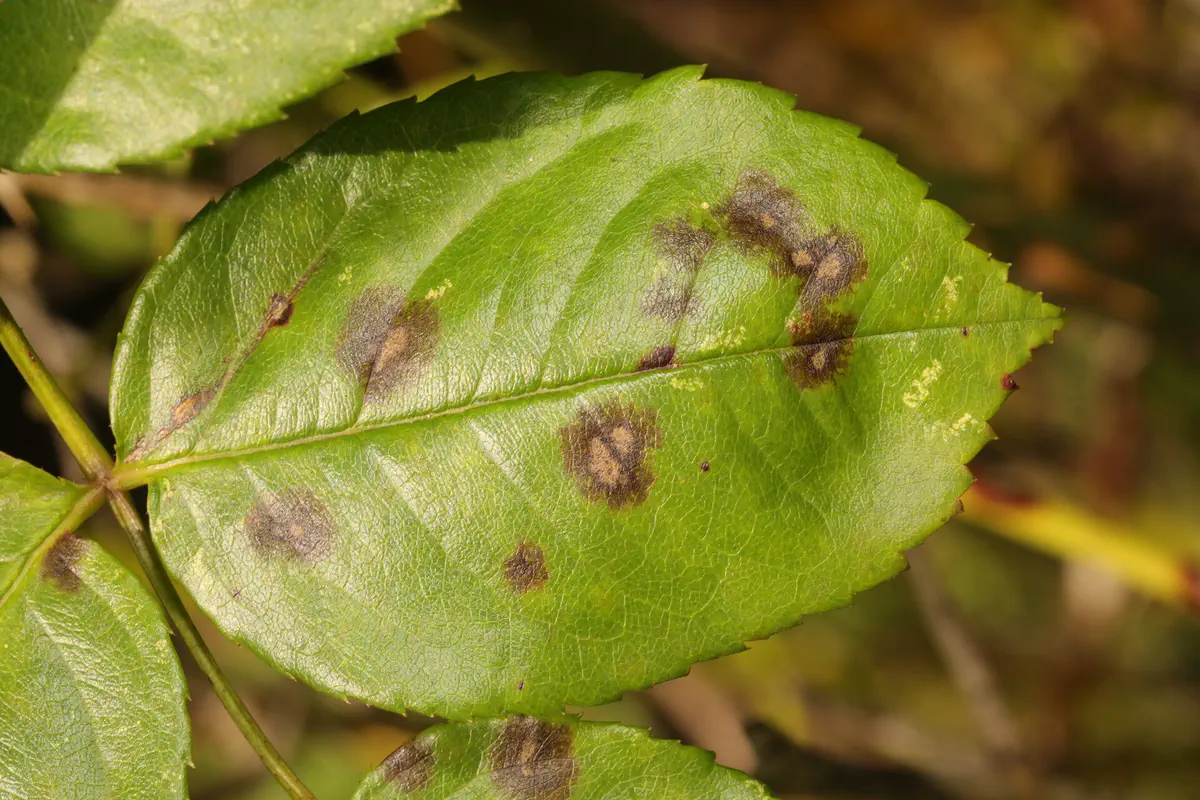
What does it look like?
- Round black or dark purple spots with feathery, fringed edges on the upper side of leaves.
- Yellowing around the spots, then the whole leaf yellows and falls.
- Lower leaves affected first, then spots moving up the plant.
Why does it happen?
- Spores from infected leaves and fallen debris splashed onto healthy leaves.
- Leaves that stay wet for hours, from rain or overhead watering.
- Crowded, shaded roses with little airflow.
What can you do about it?
- Pick off spotted and yellow leaves and gather fallen leaves from the ground. Put them in a sealed bag in the bin, not the compost.
- Water at the base of the rose in the morning so the leaves stay dry.
- Prune crowded or crossing stems to let air through, and clean your pruners between plants.
- Add a layer of mulch under the rose so spores in the soil don't splash up.
- If it keeps spreading, a fungicide labelled for black spot on roses can help: follow the label, check it is approved for home use where you live, wear gloves, and don't spray open flowers.
When you photograph a plant with this problem, Leafsight gives an assessment that names the likely problem, how serious it looks and how sure it is. Your first assessment that finds a problem includes care steps like these; with Pro or a one-time unlock, every one does.
When should you look closer?
- Dark spots on stems or canes as well as leaves.
- Spots without fringed edges, or on plants other than roses: that is a different problem.
Questions
Should I remove rose leaves with black spot?
Yes. Pick off leaves with black spot and leaves that have turned yellow, and gather fallen leaves from under the rose, because rain and watering splash spores from them back onto healthy leaves. Put them in a sealed bag in the bin, not the compost. On a badly affected rose, remove leaves a few at a time over several days so the plant isn't stripped at once.
How does black spot spread on roses?
Rose black spot spreads in water. Spores from infected leaves and fallen debris are splashed onto healthy leaves by rain or overhead watering, and they need leaves that stay wet for several hours to infect them. That is why black spot is worst in wet springs and summers, starts on the lower leaves, and moves up the plant.
Will black spot kill my rose?
Black spot rarely kills an established rose on its own, but it weakens the plant over a season by making leaves drop early, which leaves less energy for growth and flowers. Several bad years in a row can leave a rose much less vigorous. Clearing fallen leaves, watering at the base and improving airflow each year all reduce the amount of disease.
Can black spot come back next year?
Yes. Rose black spot survives the winter on fallen leaves and infected stems, then splashes onto new leaves in spring. Clearing all fallen leaves in autumn, pruning out canes with dark spots, and adding a layer of mulch under the rose in spring cut down the spores that start the next year's infection. Choosing varieties listed as resistant also helps.
Not sure? Check with a photo
Leafsight looks at a photo of the leaf, asks a few questions about light, watering and drainage, and gives an assessment of the likely problem with care steps. A photo assessment can be wrong: for a hands-on look, ask a local garden centre or plant clinic.
Related problems
- Powdery mildew: white powder on leaves and what to do
- Leaf spot: brown and black spots on leaves and what to do
- Yellow leaves on houseplants: common causes and what to check
- Tomato blight: early blight and late blight, and what to do
Sources
Updated 2026-11-04. All plant problems.
Also in: Español · Deutsch · Français · Português (Brasil) · 简体中文 · 日本語 · 한국어