Aphids on plants: how to spot them and what to do
Aphids are small, soft-bodied insects that suck sap from new shoots, flower buds and young leaves, in colonies you can see with the naked eye. They can be green, black, yellow, brown, red or pink. Small colonies can be squashed, pruned off or knocked away with a strong spray of water.
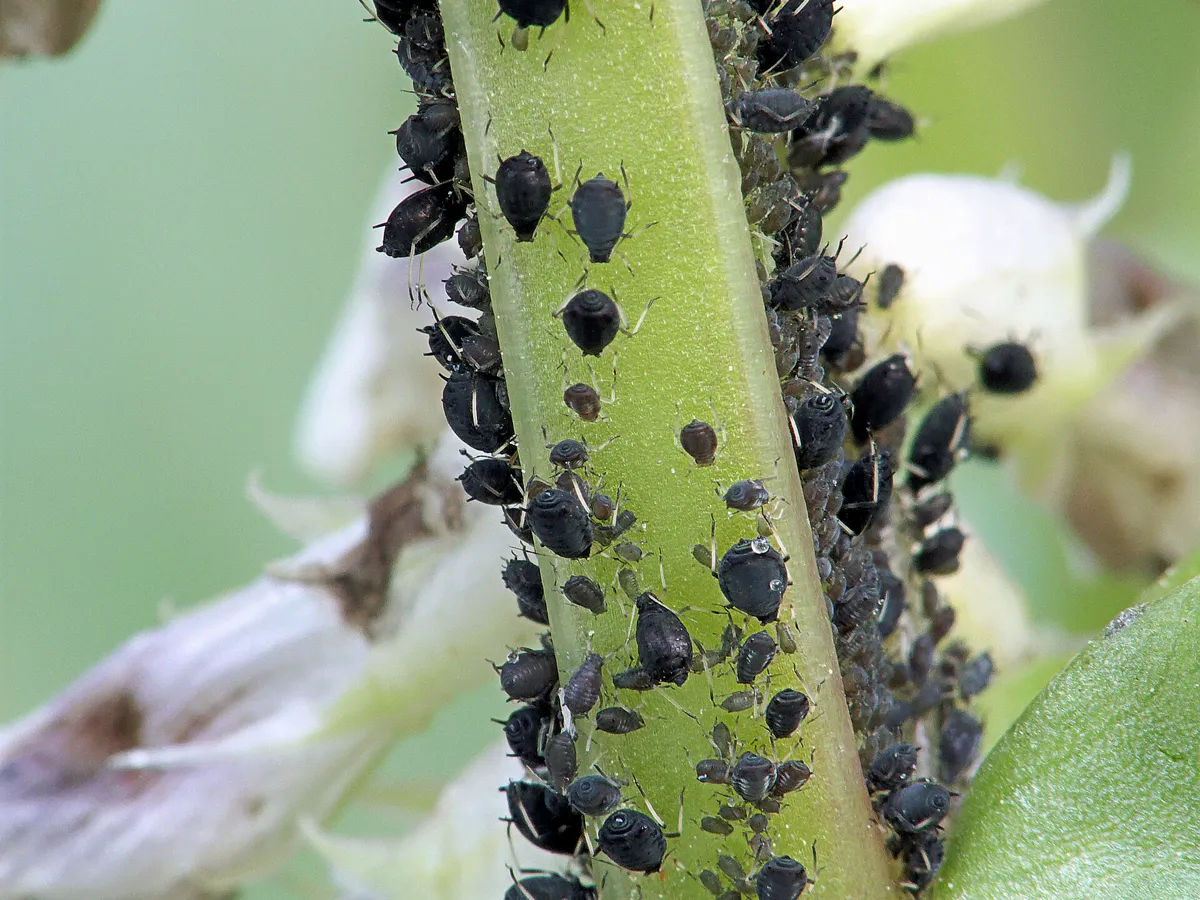
What does it look like?
- Clusters of small, pear-shaped insects on shoot tips, flower buds and the undersides of young leaves.
- Curled, distorted or yellowing leaves and stunted new growth.
- Sticky honeydew on the leaves, sometimes turning black with sooty mould.
- White cast skins on the upper side of leaves, or ants climbing the plant.
Why does it happen?
- Soft, fast-growing new shoots, which aphids prefer.
- Too much fertiliser, which encourages the lush growth aphids build up on.
- A new plant brought home with aphids on it, or winged aphids arriving from nearby plants.
- Ants tending the colonies and driving off the insects that eat aphids.
What can you do about it?
- Check new shoots and the undersides of leaves often, so you can act while colonies are small.
- Squash small colonies between finger and thumb, or prune off badly infested shoots.
- Knock aphids off sturdy plants with a strong spray of water, outdoors or in the shower for houseplants.
- Move an affected houseplant away from your other plants.
- Outdoors, leave ladybirds, hoverfly larvae and other natural enemies to feed on them; in spring they often catch up after a few weeks.
- If they keep coming back, an insecticidal soap or horticultural oil can help: follow the product label, check it is approved for home use where you live, wear gloves, and keep children and pets away until it is dry. Don't use them on dry, stressed plants or in hot weather.
When you photograph a plant with this problem, Leafsight gives an assessment that names the likely problem, how serious it looks and how sure it is. Your first assessment that finds a problem includes care steps like these; with Pro or a one-time unlock, every one does.
When should you look closer?
- White, fluffy insects in leaf joints rather than on shoot tips: possibly mealybugs.
- Mottled, yellowed or curled leaves on squash, beans or lettuce: aphids can spread plant viruses.
Questions
How do I get rid of aphids on plants?
Start without sprays. Squash small aphid colonies between finger and thumb, prune off badly infested shoots, and knock aphids off sturdy plants with a strong spray of water. Check new growth every few days, since colonies build up quickly. If aphids keep coming back, an insecticidal soap or horticultural oil used at the label rate is the next step, applied to the undersides of leaves too.
Do aphids kill plants?
Very rarely. Most established plants tolerate aphids and outgrow the damage, although large colonies can curl and yellow leaves, stunt new shoots and leave sticky honeydew that turns black with sooty mould. Seedlings and young plants are more at risk, and some aphids spread plant viruses on vegetables such as squash, beans and lettuce, so it is worth acting sooner there.
What is the sticky stuff on my plant leaves?
Sticky, shiny leaves are usually coated in honeydew, a sugary liquid excreted by sap-sucking insects such as aphids, scale insects and mealybugs. Look on the shoot tips and the undersides of the leaves above the sticky area. Black sooty mould often grows on the honeydew; it can be wiped off with a damp cloth once the insects are dealt with.
Why do I have aphids on my houseplants?
Aphids on houseplants usually arrive on a new plant or as winged aphids from outdoors, and indoors they can stay active all year. Lush, soft new growth, often from feeding more than the label suggests, suits them best. Check new plants closely, keep them apart from your other plants for a few weeks, and look at the shoot tips regularly.
Can aphids spread to my other plants?
Yes. Winged aphids fly to new plants, and colonies grow quickly on soft new growth, so one infested plant can soon lead to several. Check nearby plants often, especially shoot tips and the undersides of young leaves, and move an affected houseplant away from the others while you deal with the colonies.
Not sure? Check with a photo
Leafsight looks at a photo of the leaf, asks a few questions about light, watering and drainage, and gives an assessment of the likely problem with care steps. A photo assessment can be wrong: for a hands-on look, ask a local garden centre or plant clinic.
Related problems
- Mealybugs: white fluffy spots on plants and what to do
- Spider mites on plants: how to spot them and what to do
- Yellow leaves on houseplants: common causes and what to check
Sources
Updated 2026-11-04. All plant problems.
Also in: Español · Deutsch · Français · Português (Brasil) · 简体中文 · 日本語 · 한국어