 Leafsight
Poinsettia dropping leaves: causes and what to check first
A poinsettia that drops leaves is nearly always reacting to its care or its spot, not to a disease. Watering is the most common cause: lower leaves that turn yellow and fall point to soil kept too wet, and leaves that wilt, curl and fall point to soil left too dry. Cold, draughts and dim rooms do the rest.
Check now: Feel the soil and lift the pot. Water only when the surface feels dry or the pot feels light.
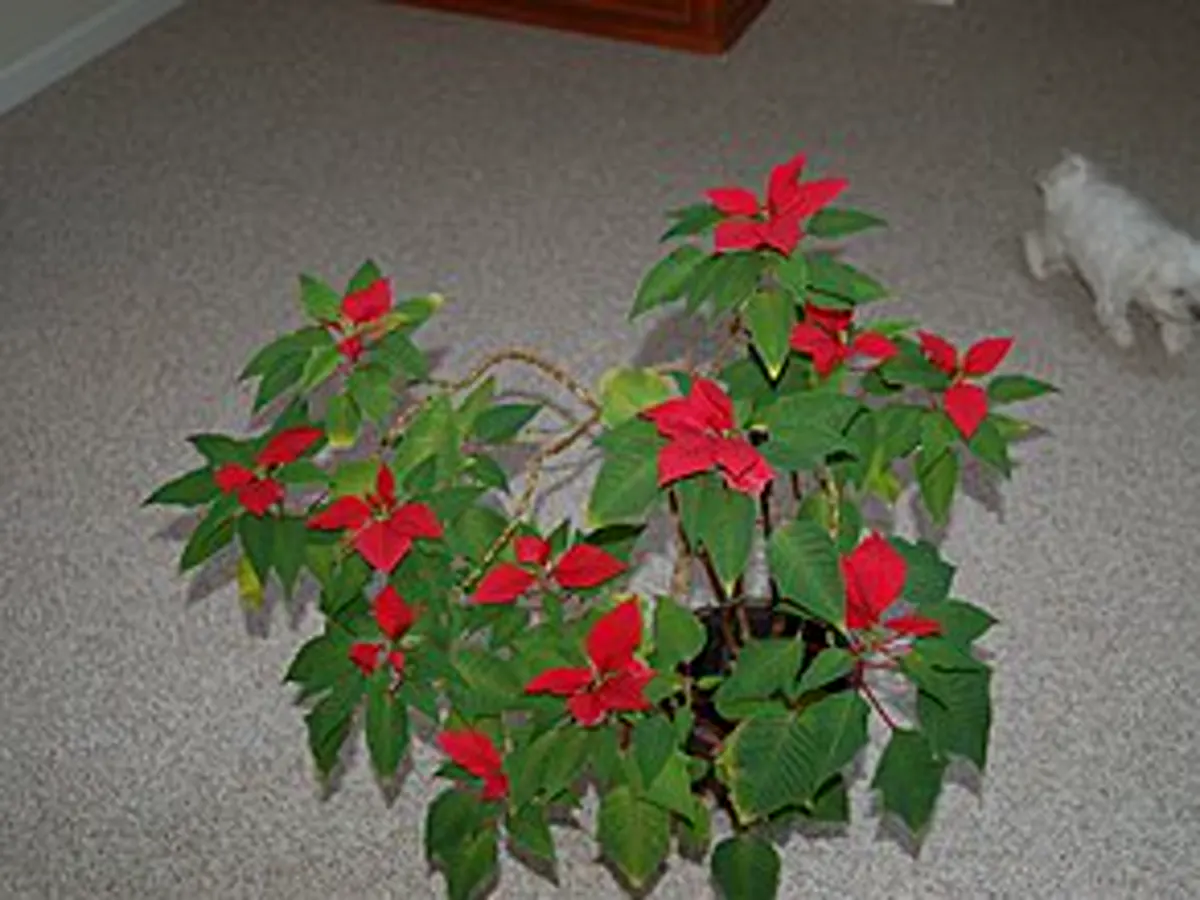
What does it look like?
- Lower leaves turn yellow and fall while the soil is wet, often with water standing in the foil or pot cover: too much water.
- The whole plant wilts, leaves curl and drop, and the pot feels light with dry soil: too little water.
- Leaves or coloured bracts wilt or turn black at the top and outer edges soon after the plant came home on a cold day: cold damage.
- Leaves fall near an outside door, a cold window or a heat vent while the soil seems fine: a draught, dry heat or sudden swings in temperature.
Why does it happen?
- Watering while the soil is still wet, or water collecting in the decorative foil or pot cover.
- Soil allowed to dry until the plant wilts.
- Cold on the way home, leaves touching a cold window pane, or a room below about 10 °C (50 °F).
- Warm, dry air from a heat vent or fireplace, a door that opens to the outside, or too little light.
What can you do about it?
- Feel the soil and lift the pot. Water only when the surface feels dry or the pot feels light.
- To water, take the pot out of its foil or cover, water at the sink until water runs from the drainage holes, let it drain, then put it back. Pour away any water that collects later.
- Move the plant to bright light near a window without letting the leaves touch the glass, away from outside doors, heat vents and fireplaces.
- Keep the room at an even, moderate temperature, about 15 to 21 °C (60 to 70 °F).
- Expect leaves that have already yellowed or blackened to fall. Watch the rest for the next two weeks: if leaves keep falling after that, check the roots.
When you photograph a plant with this problem, Leafsight gives an assessment that names the likely problem, how serious it looks and how sure it is. Every photo assessment needs Leafsight Pro or a one-plant pass, and each one that finds a problem includes care steps like these.
When should you look closer?
- The plant wilts while the soil is wet: root rot, which can make the whole plant collapse quickly.
- Tiny white insects that fly up when the plant is touched, or white fluff where the leaves join the stem: whiteflies or mealybugs.
Questions
Why is my poinsettia dropping leaves?
A poinsettia most often drops leaves because of watering. Lower leaves that turn yellow and fall point to soil kept too wet, often because water has collected in the foil or pot cover. Leaves that wilt, curl and fall point to soil left too dry. Cold on the way home, a draught from an outside door, dry air from a heat vent or too little light can also make poinsettia leaves fall.
How often should I water a poinsettia?
There is no fixed schedule for watering a poinsettia. Check it every day or two and water when the soil surface feels dry to the touch or the pot feels light. Take the pot out of its foil or cover, water until it runs from the drainage holes, and let it drain before putting it back. Soil that stays wet rots the roots, and soil that dries until the plant wilts makes leaves fall.
Can a poinsettia recover after losing its leaves?
Sometimes. A poinsettia can keep the leaves it still has once the cause is fixed. Check that the soil is neither soggy nor dry, that no water stands in the pot cover, and that the plant is away from cold draughts and heat sources. A poinsettia that wilts while its soil is wet probably has root rot and may not recover.
Related problems
- Overwatering and root rot: signs, causes and what to do
- Overwatered or underwatered? How to tell the difference
- Yellow leaves on houseplants: common causes and what to check
- Mealybugs: white fluffy spots on plants and what to do
Sources
- Iowa State University Extension: Guide to selection and care of poinsettias
- University of Minnesota Extension: Growing and caring for poinsettia
- Clemson HGIC: Poinsettia
- University of Maryland Extension: Poinsettias
Updated 2026-11-17. All plant problems.
Not sure? Check with a photo
Leafsight looks at a photo of the leaf, asks a few questions about light, watering and drainage, and gives an assessment of the likely problem with care steps. A photo assessment can be wrong: for a hands-on look, ask a local garden centre or plant clinic.
Download on the App StoreFrom $4.99 for one plant
Ask ChatGPT about thisAsk Claude about thisCopy as Markdown
Also in: Español · Deutsch · Français · Português (Brasil) · 简体中文 · 日本語 · 한국어